06 May, 2022
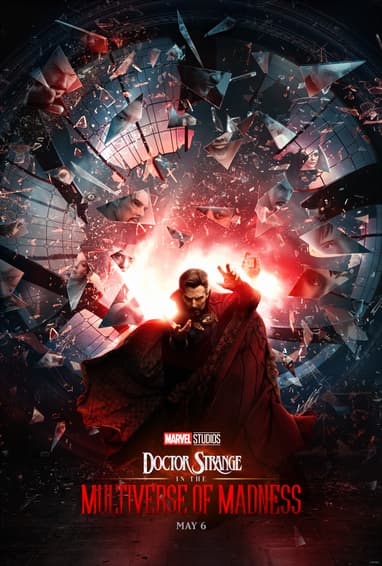
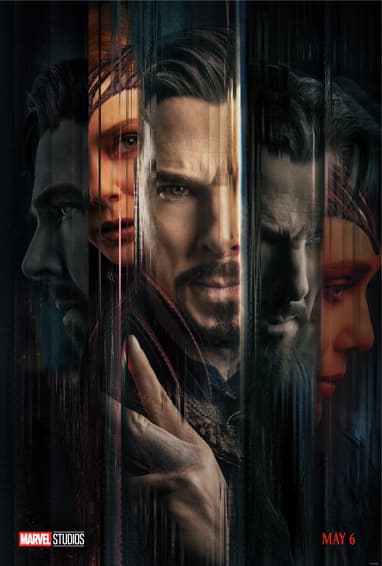
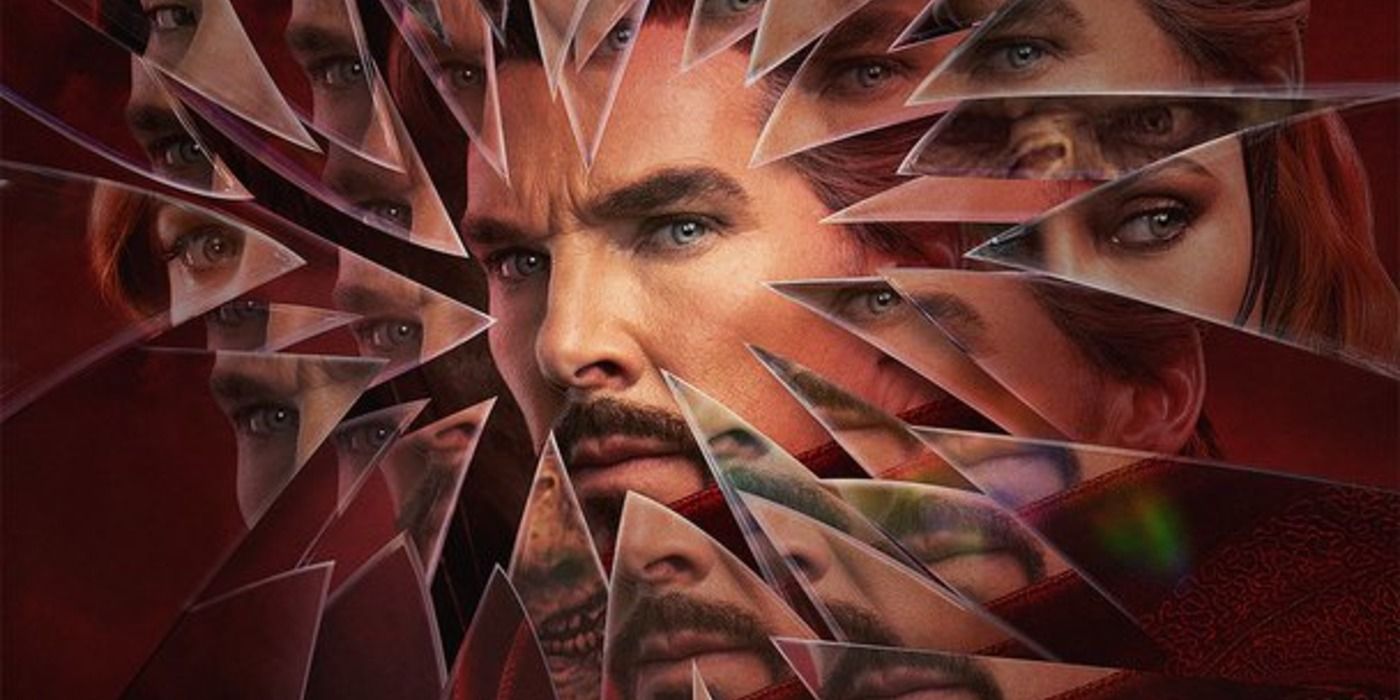
Movie Review: Doctor Strange in the Multiverse of Madness
24 February, 2018
Movie Review: Black Panther
Origin of a superhero. Rise of a king.
Marvel has been on a roll. They have consistently delivered on the superhero movie front and have constantly upped the ante when it comes to making superhero movies entertaining. Their latest outing, touted as the first major superhero movie featuring a cast that predominantly comprises of african-american performers is not just another good superhero movie, but is being touted as a turning point in the history of cinema. And for good reason.
Black Panther's history as being conceived at a time when racism was at its epitome makes him one of the most interesting characters in terms of fictional and non-fictional history. Named after the political revolutionary black party that is said to have made the biggest influence in history, and being published around the time, the comic features a black superhero who also happens to be king of an extremely secretive african nation with access to technology more advanced than others but keeps it hidden for their own protection, appearing as a third world nation to the rest of the world. He is ruler, protector, judge and executioner - the Black Panther.
The movie stays faithful to the comic's roots, but takes liberties to keep up with the times. Also completely reimagined is the villain, who will be detailed upon in this review.
An origin story, Black Panther follows the treaded path of a man becoming a superhero. But that is all that is similar to the rest of the origin stories. Black Panther is a superhero movie. But more than that, it is a coming of age film, a political thriller, an action movie, a family drama all rolled into one sleek shiny panther like package.
The film is set in Wakanda, a fictional African nation that has thrived on it's supply of Vibranium (the fictional metal that Captain America's shield is made of), unknown to the world and appearing to them as a third world nation. The king has died in a terrorist attack (Captain America: Civil War) and it is now up to the Prince T'Challa, played by an impeccable Chadwick Boseman, to step up to the throne and become King and also claim the mantle of Black Panther, protector of Wakanda. But the path to the throne, although straight, is one that is strewn with rocks and thorns. One of those is the international smuggler Ulysses Klaue (played delightfully by the master class Andy Serkis) who happens to be the only outsider that has seen Wakanda. He happens to be a threat and a well placed plot device to further the narrative, leading to our hero's true challenger and the movie's villain, Killmonger. And what a villain he is.... Killmonger happens to be the best part of a really good movie. Finally, we have a supervillain who breaks the mould and happens to be the best written character in the film. You end up rooting for him, and it is made easier with an incredibly charismatic performance by Michael B. Jordan. Evil and likable at the same time, this villain has a beautiful reason to drive his fury and his wrath on Wakanda. He is a revolutionary, radicalized by the hardships faced by his kith and kin outside Wakanda while those protected inside the nation are thriving. Wakanda has the means and the power, but still won't do anything about it. And this is one of the motivations this guy has to take over the throne.
Wakanda's women are the strongest. The elite guard is an all female outfit - The Dora Milaje. Also, the women in T'Challa's life feature all incarnations of women in life, mother - The Queen (Angela Bassett), the sister Shuri (Letitia Wright), the lover Nakia (Lupita Nyong'o), the friend Okoye (Danai Gurira). All these characters are protectors to our King, making for a refreshing abundance of strong female characters. Each of them are played on screen exceptionally well, but Letitia Wright takes the cake with her hip, cool portrayal of Shuri, the kid sister who loves her big brother and has more of a playful relationship with the king rather than respectful which makes for some of the funniest moments in the movie.
The rest of the cast have done justice to their roles. Watch out for M'Baku and his quip that evokes the most laughter at one of the most sombre moments in the movie.
Cinematography, Editing and production design are top notch as with all modern superhero movies. But the standout technical feature is the music composed by Ludwig Göransson. The score is hip, evocative, epic and the best feature is its callback to the ethnic roots of African music. It is truly a masterpiece.
Ryan Coogler has my vote as one of the best new directors on the block. His previous outings, Fruitvale Station and Creed, were very intimate films and he has brought that aspect to the superhero movie genre. Hats off to him and here's to more.
Essentially, Black Panther is quite simply one of the best superhero movies that has come out in recent times. What makes it all the more significant is that it is a movie that celebrates and shines in ethnic pride. And that, in today's scenario where intolerance is on the rise makes for extremely compelling social commentary.
Verdict: 5/5
30 November, 2015
#4: A Year Older
While it feels special, being a year older brings into sharper focus about what all I have not achieved yet. Brought into even sharper relief are the losses that I never gave a thought about at the time, when it seemed so easy to let go, but now feels like a part of me that can never be replaced. and then there is the feeling that I haven't done enough to leave a mark, to have realized and fulfilled my purpose. And when I think about it, I feel like a child staring at the sky, full of wonder at what's out there, hoping it's all good, fearing it'll be bad. (I guess it's normal nowadays to have multiple views on anything. Our way of life has led us all to develop dissociated identities. One for work, one for home. One for family, one for friends.)
All this might seem like I don't appreciate the effort everyone puts into making me feel special on my birthday. The truth is far from it. I'm very touched by all that. It's just that birthdays aren't as special to me as they were before.
Still, no one's going to punish me for singing 'Happy Birthday to me'. :)
26 October, 2015
#3: Better late than never. :)
16 March, 2013
Book Review: Oath of the Vayuputras by Amish (also includes a short insight into THE SHIVA TRILOGY) (CONTAINS SPOILERS)
Gods were men once....
This is the basic premise of Amish Tripathi's "The Shiva Trilogy". We have grown up listening to stories, legends, myths about Gods, stories so fantastic that made it difficult to believe such Gods even exist. However, Amish took the idea and turned it on its head. Great men were worshipped because of their actions, records of their deeds were lost or destroyed, leaving only fragments behind and now, they still continue to be worshipped, albeit as Gods.
"The Shiva Trilogy" consists of three books - "The Immortals of Meluha", "The Secret of the Nagas" and "The Oath of the Vayuputras". The first two books in the series were released to widespread commercial and critical success, reaching bestseller lists and remaining there for quite some time. As such, the amount of anticipation for the third and final book in the series reached epic heights for a relatively new writer in the Indian fiction category. Does "The Oath of the Vayuputras" provide a proper and, at the least, a fitting conclusion to story of a man who became a God? Read on and find out.
The Shiva Trilogy follows the tale of a Tibetan tribal named Shiva, who suddenly finds himself thrust into the limelight as the prophesied Neelkanth, the destroyer of Evil. In "The Immortals of Meluha", we see the protagonist, Shiva, accepting his role as the Lord Neelkanth, although grudgingly, and living it out. We are introduced to the Meluhans/Suryavanshis, Swadweepans/Chandravanshis and the Nagas, a creed of fearsome and extremely skilled deformed warriors feared and regarded as terrorists equally by both the Suryavanshis and Chandravanshis. The Meluhans are ruled by Emperor Daksha and are a very happy and satisfied people. They follow rules rigidly and are very organised. We witness a beautiful love story between Shiva and Sati, the daughter of Emperor Daksha. Shiva's relationship with his friends, companions and followers are also explored in detail. Shiva ends a law that is completely unjust, learns that magic is actually science and displays his legendary prowess in battle. The origin of the war-cry "Har Har Mahadev" is well imagined and re-interpreted. We also see Shiva effectively destroying evil, suffering the loss of Brahaspati, a Meluhan scientist and a person Shiva had come to consider as his brother, at the hands of a Naga, referred to as the Lord of the People, in the process. A war is waged between the Suryavanshis and the Chandravanshis and the former are victorious. But at the end of it all, something lingers. He sees that Chandravanshis are also a happy people, but are a complete paradox to the Suryavanshi way of life, no regard for rules or protocol. But they too are waiting for the Neelkanth, to destroy evil. Has he actually destroyed evil by helping the Suryavanshis prevail over the 'evil' Chandravanshis? Are the Chandravanshis the evil he's meant to destroy?
In "The Secret of the Nagas", Shiva and the readers undergo a shift in perspective regarding evil. The 'evil' Chandravanshis are not all evil, just different. Then what is evil? This quest leads Shiva to the Nagas. But it turns out that even the Nagas are not evil. Far from being evil, these warriors are shown to be full of righteousness, integrity and valour. A confused Shiva does not give up and continues his quest for evil, aided by the all-knowing Vasudevs, supported by his wife and friends. It is revealed that the Naga Queen Kali, an antagonist in the first book, is in fact Sati's twin sister, who was discarded by her father due to her deformities. We also learn that the Naga Lord of the People is Ganesh, Sati's first-born who was supposedly still-born, but suffered the same fate as Kali due to his apperance. Due importance is given to the relationship between Shiva, Sati and Ganesh. Nearing the climax, Shiva and company are attacked with Daivi astras, divine weapons that had been banned by the previous Mahadev (Neelkanth), Lord Rudra. Brahaspati is actually alive and had faked his death. By the end of this book, Shiva and the readers are further confused regarding the true nature of evil, but are already on threshold of discovering it.
And now, we begin the subject proper, the review of the conclusion to this epic tale, "The Oath of the Vayuputras".
The book begins with a dream sequence, which ends right where the previous book left off. Brahaspati, shown to be alive, begins explaining why he had to do what he had to do and this is where we come to realise the true identity of evil. It is not a person, it is not a nation but, on the contrary, something that has done lots of good for Meluha and Shiva himself. The Somras. The drink of the Meluhans that grants them a prolonged life and dramatically improves the quality of the same. "Good and evil are two sides of a coin". But Shiva still has his doubts. So he journeys to the land of the Vasudevs, but not before learning that he and his convoy had been attacked by a joint order of the Emperors of Meluha and Swadweep. He also comes to the conclusion that there is a master puppeteer behind the curtain. The Neelkanth finds peace with Ganesh and accepts him as his son without question. We also see the development of the character of Kartik, the son of Shiva and Sati, who was a little child in the previous book. The rest of the book describes the war that is waged against the Somras.
For a book that is close to 600 pages, there is a very small and simple plot. But the writer has successfully transformed what could have been a mediocre fizzle at the end into a nuclear explosion. The characters have been beautifully described and developed with amazing detail over the previous two books, but with this book, the writer goes a step further. All characters are faced with extremely difficult choices at one point or the other, and the choices they make are nothing but astounding. Whether they choose to remain on the side of Shiva or the Empire, you can't help but feel even more respect when they make their decision, revealing yet another admirable facet to their personality.
One of the most important attributes explored in this book is the idea of "Evil". You realise that no one is evil in the book. Everyone has a righteous reason for what they are doing. What is evil to us may be completely justified and for the greater good from the other person's point of view. This is easily one of the best aspects of the book, and has been handled beautifully by the writer. The scientific descriptions may seem to be in layman terms, but then how else could one explain science to a layman?
The battles are just epic and have been described in beautiful, vivid, violent and bloody detail. These portions are not for the tame. One such sequence is when Kartik fells a rhinoceros near the beginning of the book. So vivid is the decription that you can see the sword-slashing and the blood-spurting happening in front of your eyes. Another such sequence is the re-interpretation of the Daksha Yagna and Sati's Agnipariksha. The references to Lord Agni and the battle waged are truly something to behold. The emotional range of this book is also on another level as compared to the writer's previous works. Particularly, Shiva's lament at the loss of Sati is heart-breaking.
This sets in motion the final act of the book. While many may feel that this act is not upto the mark, my humble opinion is that this was the best, most logical and most suitable way for the tale to end. No one could stand any more drama or violence because, at the end, everyone had lost something.
However, the epilogue is something that all the readers and reviewers will concur with me to be fitting to the legend. The writer ties up all the loose ends, even gives us insight on how these amazing people have attained their current status as our Gods and even goes international, just for the scope, I think. There is even a subtle hint about what the writer's next project will be.
Finally, my verdict?
This is by far the best book Amish Tripathi has written. For it's sheer audacity, premise and rich storytelling, this book is a must-read for fiction fans. Only, I feel that the language, i.e. the grammar and usage of contemporary terms, could have been better. Let's hope Amish reads this and takes my humble opinion into account for his future projects.
However, if you haven't read the prequels, I suggest you get the entire trilogy and immerse yourself into the world of Shiva. You might just be surprised. And you will not regret it.
SCORE: 4.5/5
14 January, 2013
#2: Encomium
Who doesn't enjoy the beauty of nature? The morning skies in its shades of baby blue, with a whole lot of cotton-fluff clouds, the sight of a river flowing seamlessly, it's surface rippling with the tiniest of turbulences caused by the strong currents, the smell of damp vegetation, the sweet, shrill songs of the birds, or the ink-black night skies, peppered with stars twinkling like diamonds, just out of our reach...
Why talk about nature alone when there is mom's cooking to smell and taste? The delicious flavours and fragrances taking over all the senses? Or even dad's rendition of old classics? Hearing his handsome voice glide effortlessly over all the nuances of classical music, comprehending the amount of joy in him when he sings? Or the physical altercations with my elder brother? The silly, stupid fights? The warm, tender hugs?
I am extremely grateful to God for blessing me into a family with such beautiful people. Although, at times, I get extremely upset at Him for bringing me into this family (I am a very emotional person as far as family is involved), I have to say that it is His and only His will alone that I am my parents' son and my brother's brother. And for that will alone, I prostrate myself before him.
My father, my mother and my brother, the three people in my life that are the most respected, admired, loved of all. They have made me who I am, as of today. Everything I am is only because of their love, their blood, their sweat, their tears. And so is everything that I will be. I have made a lot of mistakes in my life, and I have let my family down several times. And they have forgiven me. Every time I've done something wrong, they have pulled me back on to my feet and encouraged me to go on. If only there was a way that I could express my gratitude and love for them....
This post is a tribute. To my Gods. "Matha, Pitha, Guru, Deivam" goes the adage. Mother, father and teachers are equal to God. And my father, my mother and my brother are my most important teachers.
I love you daddy, mommy & cheta.....
P.S. This post is a tribute from all children to their parents and siblings....
10 January, 2013
#1: My first blogpost
At this moment, I'm thinking of the different ways I can impress someone who reads this. And, as of now, that unlucky person is you. And if you actually have come this far, I'm actually getting pretty good at this stuff.
Anyway, let me officially begin this blog wishing everyone a very happy, prosperous, healthy, wealthy and wonderful new year.
Why 'Glasscracks'?
Naming a blog while seemingly easy at first, turned out to be a pretty tough exercise, one that requires perseverance and patience (neither of which I possess), because all the domain names (close 50-60) I had considered had been taken. I actually wanted to name this blog with something that relates to thoughts and ideas, but no. All of them were taken. And then in search of a name that was simple and at the same time created an impression of complexity (YEAH, RIGHT!), I settled for 'Glasscracks". It's not even a word, I know. But it does seem like one. As for it's usage, I kind of thought of using it as a metaphor for life - sometimes as smooth as glass, sometimes so bad as to hurt you, wounds never heal, memories stay etched, cracks never go away. Nice, isn't it?
What to expect:
1. Random ramblings
2. Opinions on current affairs
3. Random ramblings
4. Photos snapped by myself
5. Random ramblings
6. Maybe a story or two (if and when I get creative)
Alright then. This is it! My first blogpost. Hope you guys enjoyed it. And if you did, please share it with your friends (I am shameless, ain't I?). If you didn't, please let me know about what went wrong. And I would really appreciate it if no one trolled here. Thanks and until next time...